


 !
!
Here’s the quick answer: that letter tag under your couch cushion is a cleaning code and using the wrong cleaning method on the wrong code can permanently damage your upholstery. W means water-based cleaning only. S means solvent-based only. WS means either method works. X means vacuum only no liquid at all.
If you’ve ever flipped a cushion over and seen a small tag with one of these letters, now you know what it’s telling you. And if you’ve ever ignored it? That might explain why your DIY cleaning attempt left a water ring, shrinkage, or a permanent stain.
Let me break this down completely so you never make that mistake again.
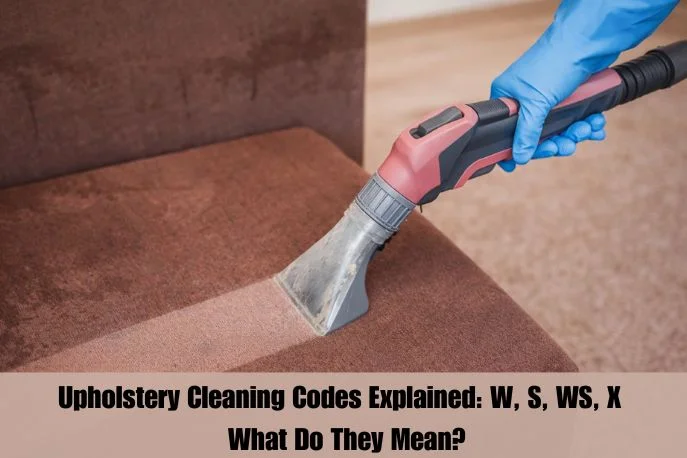
Why These Codes Exist – And Why They Matter More Than You Think
Upholstery fabric is not all the same. A microfiber sofa, a linen armchair, a velvet sectional, and a leather couch all react completely differently to cleaning products and moisture.
The cleaning code was created by the furniture industry specifically to prevent damage from improper cleaning. It’s the manufacturer telling you in one letter exactly how this fabric was designed to be cleaned.
The problem? Most NYC homeowners either never check the tag, can’t find it, or don’t know what the letters mean. They grab whatever spray they have under the sink, scrub the stain, and wonder why the fabric looks worse afterward.
At Green Choice Commercial Carpet Cleaning NYC, we check the cleaning code on every single piece of upholstery before we touch it. It’s step one, every time. No exceptions.
The 4 Upholstery Cleaning Codes – Fully Explained
W — Water-Based Cleaning
What it means: This fabric can be cleaned using water-based cleaning solutions, steam cleaning, or hot water extraction.
What fabrics typically carry this code: Many synthetic fabrics including nylon, polyester blends, and some cotton blends.
What you can do at home: Mild water-based upholstery shampoo with a clean white cloth. Always blot, never scrub.
What a professional does: Hot water extraction (steam cleaning) with the correct pH-balanced solution. This is the most thorough clean possible for W-coded fabrics.
What to avoid: Dry cleaning solvents these can strip color or damage the fiber on W-coded fabric.
S — Solvent-Based Cleaning Only
What it means: Water will damage this fabric. Only use dry cleaning solvents or solvent-based upholstery cleaners. No water, no steam, no water-based products.
What fabrics typically carry this code: Rayon, acetate, some silks, and certain velvet blends. These fabrics shrink, water-stain, or distort when exposed to moisture.
What you can do at home: Very little, honestly. Dry cleaning solvent from a hardware store, applied carefully with a clean cloth in a well-ventilated area. But one wrong move and the damage is permanent.
What a professional does: Dry cleaning method using the correct solvent applied with control and precision, then properly extracted without leaving residue.
What to avoid: Any water. Any steam. Any water-based spray. Even a damp cloth can leave a permanent ring on S-coded fabric.
This is the code where most DIY cleaning disasters happen. If your couch is coded S and you’ve been spraying it with water-based cleaners stop immediately.
WS — Water or Solvent Cleaning
What it means: This fabric is versatile it can handle both water-based and solvent-based cleaning methods. This gives professionals the flexibility to use whichever approach is better suited for the specific stain or soil type.
What fabrics typically carry this code: Many durable synthetic blends, some microfiber fabrics, and performance upholstery fabrics designed for heavy use.
What you can do at home: Mild water-based cleaner for light stains, or a solvent-based product for oil-based stains. Always test on a hidden area first.
What a professional does: We assess the stain type and choose the best approach water extraction for general cleaning and odors, solvent treatment for grease, oil, or ink-based stains.
What to avoid: Even with WS fabric, using too much moisture or the wrong product concentration can cause problems. More is not better.
X — Vacuum Only. No Liquid. Ever.
What it means: This fabric cannot tolerate any liquid cleaning of any kind water or solvent. The only safe maintenance is vacuuming and light brushing.
What fabrics typically carry this code: Certain delicate wovens, some vintage or antique upholstery, and fabrics with backing materials that react badly to moisture.
What you can do at home: Regular vacuuming with a soft brush attachment. That’s it.
What a professional does: We can still help careful dry extraction vacuuming, light brushing techniques, and for staining, sometimes a referral to a specialist dry cleaner who handles X-coded fabrics.
What to avoid: Everything liquid. This is the one code where even professionals are limited in what liquid-based cleaning they can apply.
Side-by-Side Code Comparison Table
| Code | Water-Based OK? | Solvent-Based OK? | Steam Cleaning OK? | DIY Friendly? | Best Solution |
|---|---|---|---|---|---|
| W | ✅ Yes | ❌ No | ✅ Yes | Moderate | Professional hot water extraction |
| S | ❌ No | ✅ Yes | ❌ No | Risky | Professional dry cleaning method |
| WS | ✅ Yes | ✅ Yes | ✅ Yes | Moderate | Professional assessment + best method |
| X | ❌ No | ❌ No | ❌ No | Vacuum only | Professional dry vacuuming only |
Where to Find the Cleaning Code on Your Furniture
Most manufacturers attach the cleaning code tag in one of these locations:
- Under the seat cushion — flip the cushion over and check the fabric tag sewn onto the bottom
- Under the sofa frame — look underneath the couch itself, often near a corner or along the back edge
- On the back panel — sometimes sewn directly onto the rear fabric of the sofa
- On the original purchase documents — if you still have the furniture manual or care guide
If you genuinely cannot find the tag or it’s been cut off call us at +1 (646) 558-2017 before attempting any cleaning. We can often identify the fabric type and appropriate method from a photo or a brief description.
What Happens When You Use the Wrong Cleaning Method
This is where things get expensive. Here’s what we see when customers call us after a DIY cleaning gone wrong:
Water on an S-coded fabric — Permanent water rings, fabric shrinkage, color distortion. In many cases this damage is not fully reversible.
Solvent on a W-coded fabric — Color stripping, fiber damage, or residue that attracts more dirt than the original stain.
Any liquid on an X-coded fabric — Backing separation, texture damage, permanent staining from the cleaner itself.
Wrong concentration of any cleaner — Even the right product used in too high a concentration can bleach, damage, or leave sticky residue on any fabric type.
The frustrating part is that the damage from incorrect DIY cleaning often looks worse than the original stain and it’s irreversible. That’s a couch replacement conversation, not a cleaning conversation.
Real Examples From NYC Homes We’ve Serviced
A Brooklyn brownstone with a vintage velvet sofa coded S — The owner had sprayed it with a water-based fabric cleaner bought from a grocery store. The water left tide marks across three cushions. We were able to improve it significantly using dry solvent treatment, but full restoration wasn’t possible. The marks were reduced, not eliminated. Check our Brooklyn upholstery cleaning services if you’re in a similar situation.
A Manhattan apartment with a W-coded microfiber sectional — Pet stains and general soiling over 18 months. Full hot water extraction brought it back completely. Fresh, odor-free, and looking close to new. See our Manhattan upholstery cleaning page for more.
A Queens home with a WS-coded fabric sofa — Mixed stains including food, grease, and general use. We used solvent pre-treatment on the greasy spots and water extraction for the rest. Came out perfectly. Visit our Queens upholstery cleaning page for details.
What to Do If Your Couch Has an Unknown or Missing Code
If the tag is gone, don’t guess. Here’s what to do:
Step 1 — Try to identify the fabric type visually and by feel. Microfiber feels soft and dense. Velvet has a directional pile. Linen is textured and somewhat stiff.
Step 2 — Do a water drop test in a completely hidden area (inside a cushion seam, for example). Drop a single water drop and watch. If it absorbs and dries without marking likely W or WS. If it darkens the fabric or leaves a ring likely S or X.
Step 3 — When in doubt, call a professional before doing anything else. One phone call is a lot cheaper than replacing furniture.
We serve customers across all NYC boroughs and Long Island Manhattan, Brooklyn, Queens, The Bronx, Nassau County, and Suffolk County. One call and we’ll tell you exactly what your fabric needs.
Related Services at Green Choice
If you’re dealing with upholstery cleaning questions, these pages may also be helpful:
- Commercial Upholstery Cleaning NYC — full-service upholstery cleaning for homes and businesses
- Office Sofa Cleaning NYC — for workplace furniture that sees heavy daily use
- Lounge Upholstery Cleaning NYC — high-traffic commercial seating
- Hotel Sofa Cleaning NYC — hospitality-grade upholstery care
- Luxury Carpet Cleaning NYC — premium cleaning for high-end homes
The Bottom Line
W, S, WS, and X are not suggestions — they’re instructions. Ignoring them is the single most common reason DIY couch cleaning makes things worse instead of better.
Before you touch your upholstery with any product, flip the cushion, find the tag, and read the code. Then decide whether you want to risk it yourself or call someone who does this every day.
At Green Choice Commercial Carpet Cleaning NYC, we know every fabric code, every cleaning method, and exactly what your specific couch needs. We’ve been doing this across New York City for years and we use only eco-friendly, green solutions that are safe for your family and your furniture.
Call us at +1 (646) 558-2017 or stop by at 365 W 50th St, New York, NY 10019. Tell us the code on your tag, describe what you’re dealing with, and we’ll give you a straight answer in minutes.
No guessing. No damage. Just the right clean done right the first time.
